

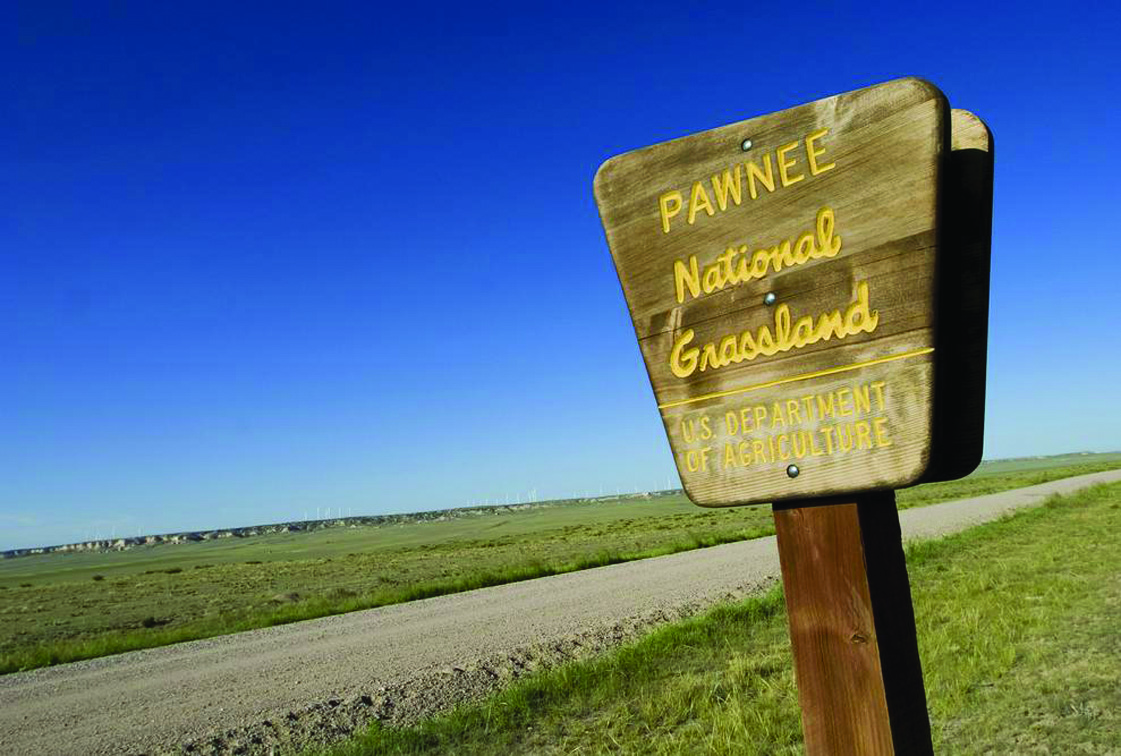
128 Miles T-Shaped Route in Northeastern Colorado, Sterling to Fort Morgan to Ault, Colorado
The pioneer spirit is alive on the Colorado Great Plains, but so are deeper echoes of the past—from the tribes who journeyed here thousands of years ago to the ancient bones still hidden beneath layers of soil.
The Pawnee Pioneer Trails Byway is unique in Colorado. This landscape was once an ancient sea, carved over five million years by the South Platte River into the mesas and buttes seen today. This eroded surface, known as the Colorado Piedmont, now supports a massive ecosystem of over 750 species of plants and animals.
Rising from the Pawnee National Grassland, the Pawnee Buttes are among the world’s premier sites for vertebrate fossils. Discoveries made here have traveled far beyond the Colorado Plains, finding homes in museums across the globe.
Human history here reaches back 11,500 years to the Paleoindians. Over the following millennia, various cultures occupied the plains, including the Cheyenne and Arapaho. Interestingly, the Pawnee people did not maintain permanent settlements in the area. They frequently traveled through and conducted raids, which later settlers applied their name to geographic features.
This region was a crossroads for historic routes, including the South Platte, Overland, Texas-Montana Cattle, and Trapper’s trails, and a significant train route. While the trains are long gone, the original railroad grades are still visible along many stretches of the byway, running parallel to the modern road.
This land holds a timeline of stories, from ancient fossils to the hardy pioneers and those who call the plains home today. You can discover these layers of history for yourself along this remote and unique Colorado Byway.
Download ItineraryVisit Website
